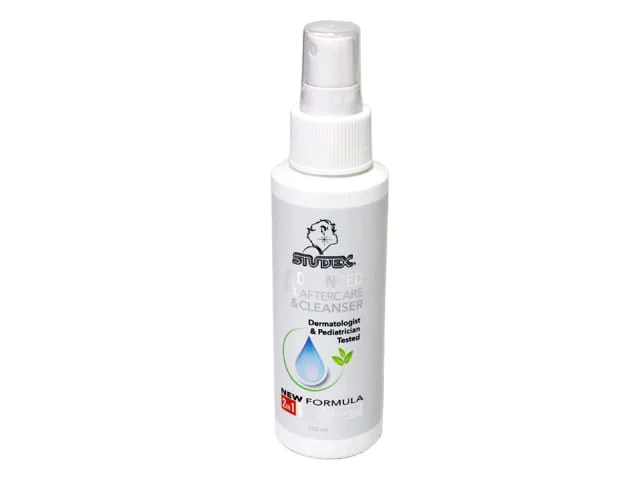
New ear piercings need clean, calm care that does not sting. Hypochlorous acid spray offers a gentle, hands off way to keep edges fresh. You mist the entry and exit points, the spray reduces surface microbes, and the skin gets a quieter healing environment. Use the guide below to set your routine, then ask your piercer or shop our HOCl aftercare if you need supplies.
Why hypochlorous acid suits new ear piercings
 Hypochlorous acid is a gentle antimicrobial your body makes; as a fine mist it helps keep new ear piercings clean without sting or dryness.
Definition: Hypochlorous acid, or HOCl, is produced by white blood cells. In a water based spray it helps neutralise surface microbes while staying skin friendly.
HOCl supports simple routines. You spray the edges, the formula reduces microbial load, and friction from touching is kept low.
- Gentle for most skin types, including sensitive.
- Contact free application limits rubbing.
- Simple formulas avoid alcohol, fragrance and dyes.
Step by step cleaning routine for new ear piercings
Mist the entry and exit points, allow one minute of contact time, then air dry; repeat two to three times daily and after sweat or makeup.
Steps
- Wash hands and check jewellery ends are secure.
- Hold the bottle a few centimetres from the piercing.
- Spray the front and back until the skin looks wet.
- Allow about one minute of contact time.
- Air dry. Do not twist or rotate jewellery.
Tip: If crusting builds up, you may add a sterile saline rinse once a day before misting HOCl.
How often should I spray
Start with morning and evening. Add a quick mist after exercise, swimming or heavy makeup days.
Should I spray after swimming
Yes. Rinse with clean water or sterile saline first if available, then mist HOCl and air dry.
Is it safe near my eyes
It is gentle, but do not spray directly into eyes. For upper ear or helix piercings, shield the eye with clean tissue and mist carefully.
Can I use HOCl on healed piercings
Yes. Many people keep a bottle for travel, sport and post makeup clean up. Adjust frequency to comfort.
Will HOCl fix a piercing bump
It can help keep edges clean, but bumps often result from pressure, snagging or jewellery fit. Address the cause and see a piercer if it persists.
Hypochlorous acid and saline solution compared
Saline rinses debris while HOCl adds antimicrobial action; many people alternate both to keep piercing edges clean and comfortable.
Quick comparison
| Feature | Saline solution | Hypochlorous acid spray |
|---|---|---|
| Main role | Rinse and rehydrate | Gentle antimicrobial clean |
| Sensation | Neutral, may drip | Light mist, low sting |
| Best for | Baseline daily rinse | Freshness between rinses |
| Use together | Rinse then mist if needed | Mist before or after a rinse |
Choose what feels best. Saline is a sound baseline; HOCl adds targeted freshness where sweat, sunscreen or makeup collect.
How often to spray and when to adjust
Start with morning and evening plus after exercise; reduce or increase frequency based on skin comfort, climate and activity.
Adjust by situation
- Hot days or sport: Add an extra mist after sweat.
- Tight headwear or headphones: Mist after removal and reduce pressure.
- Makeup users: Remove residue from edges, then mist lightly.
- If skin feels tight: Skip one application and reassess the next day.
Your routine should feel calm, not harsh. You control frequency to match your day.
Helix, tragus and daith tips for tricky spots
Cartilage areas trap sweat and are hard to reach; use short mists from both sides and reduce pressure from helmets, headphones and pillows.
Placement cues
- Helix: Mist front and back; use a travel pillow to avoid night pressure.
- Tragus: Spray at an angle to reach the inner edge; keep earphones clean.
- Daith: Short bursts from both sides; dry gently with airflow only.
- Lobe: Easiest access; avoid catching on clothing and hair tools.
You work with the placement, not against it. Less pressure plus clean edges equals fewer setbacks.
Sensitive skin guidance for HOCl use
 HOCl suits most skin types; patch test nearby first and keep routines simple, avoiding alcohol and fragrance around fresh piercings.
Do this if you are reactive
- Patch test once on adjacent skin before daily use.
- Keep routines minimal; avoid stacking multiple actives.
- Rinse away haircare that can creep onto the area.
- Choose breathable fabrics and avoid tight hats or headbands.
Gentle inputs support the skin barrier. You use fewer products, the area stays calmer, and healing stays on track.
Troubleshooting bumps, crusting and irritation
HOCl keeps edges clean but bumps often stem from pressure, snagging or jewellery fit; fix causes and seek a piercer if swelling persists.
Common issues and steps
| Issue | Likely cause | What to try |
|---|---|---|
| Tender red bump | Pressure or friction | Adjust jewellery style and reduce pressure |
| Persistent crust | Infrequent cleaning | Add a saline rinse and increase HOCl frequency |
| Itchy dryness | Harsh nearby products | Remove irritants and simplify routine |
| Heat with thick discharge | Possible infection | Keep jewellery in and see a clinician promptly |
Act early. Small adjustments with consistent cleaning usually settle minor concerns.
When not to proceed
Do not spray into eyes or deep wounds; stop use if rash, heat or pus develops and get professional advice before removing jewellery.
Pause and seek help if you notice
- Rapidly increasing pain or swelling.
- Spreading redness, heat or fever.
- Thick green or foul smelling discharge.
- A rash that persists after stopping the product.
Safety first. You pause the product, keep jewellery in place, and contact a professional.
If it is urgent do this first
With rapidly increasing pain, heat or fever, keep jewellery in place, avoid home removals and contact a piercer or GP the same day.
Urgent steps
- Do not remove jewellery at home to avoid sealing infection.
- Take clear photos and note when symptoms began.
- Call your piercer or GP and follow their advice.
- Use sterile saline for gentle rinsing until reviewed.
Early action protects options and reduces stress.
How this connects to related piercing and skin care
The same gentle principles support healed piercings and minor skin care; adjust frequency and follow professional instructions.
Connections
- Healed piercings still benefit from a quick mist after sport or travel.
- Minor skin nicks may be cleaned gently, then protected as advised.
- Tattoo aftercare needs gentle cleansing and minimal friction.
A single, calm approach keeps daily care simple.
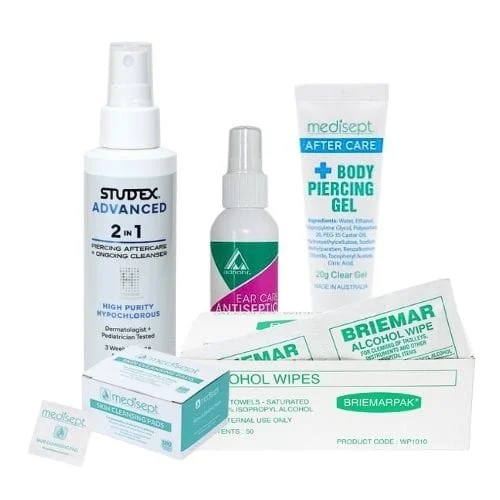
Aftercare products checklist that keeps it simple
Choose HOCl sprays with minimal ingredients, sterile packaging and clear directions; avoid alcohol, dyes and harsh antiseptics.
Checklist
- Hypochlorous acid as the active with purified water.
- Fine mist sprayer for hands off use.
- Fragrance free, alcohol free, dye free labelling.
- Clear directions for new and healed piercings.
- A spare bottle for your gym bag or travel kit.
Simple labels are a good sign. You pick minimal, your skin stays calmer, and routines are easier to stick to.
Price and timeline factors for Australian users
Healing timelines vary by placement, jewellery quality and lifestyle; bottle size and frequency influence cost per day of care.
What influences healing
- Placement: Cartilage often takes longer than lobes.
- Jewellery: Implant grade materials reduce irritation risk.
- Lifestyle: Sport, helmets and heat increase exposure and friction.
- Routine: Consistent HOCl and saline use supports steady progress.
Plan for a daily bottle and a backup for travel or sport. Staying prepared helps you keep the routine consistent.
Ready to set your routine
Keep a hypochlorous acid aftercare spray within reach, mist two to three times a day, and keep hands off while it heals. For personalised advice, speak with your piercer or shop our HOCl spray today.
Related Posts

Want to create a wholesale account?
Get access to discounted pricing, easy online ordering and fast national shipping
by signing up for a wholesale account. It’s quick and easy.
Please contact us if you have any questions before registering online.